
When you want to change your car’s colour, a respray is not the only option. A coloured film wrap leaves the original paint in place and adds a new colour and texture on top. In this guide we bring together how the process works, what to consider when choosing a colour and finish, and what you should know about removing the film.
What is a colour change wrap?
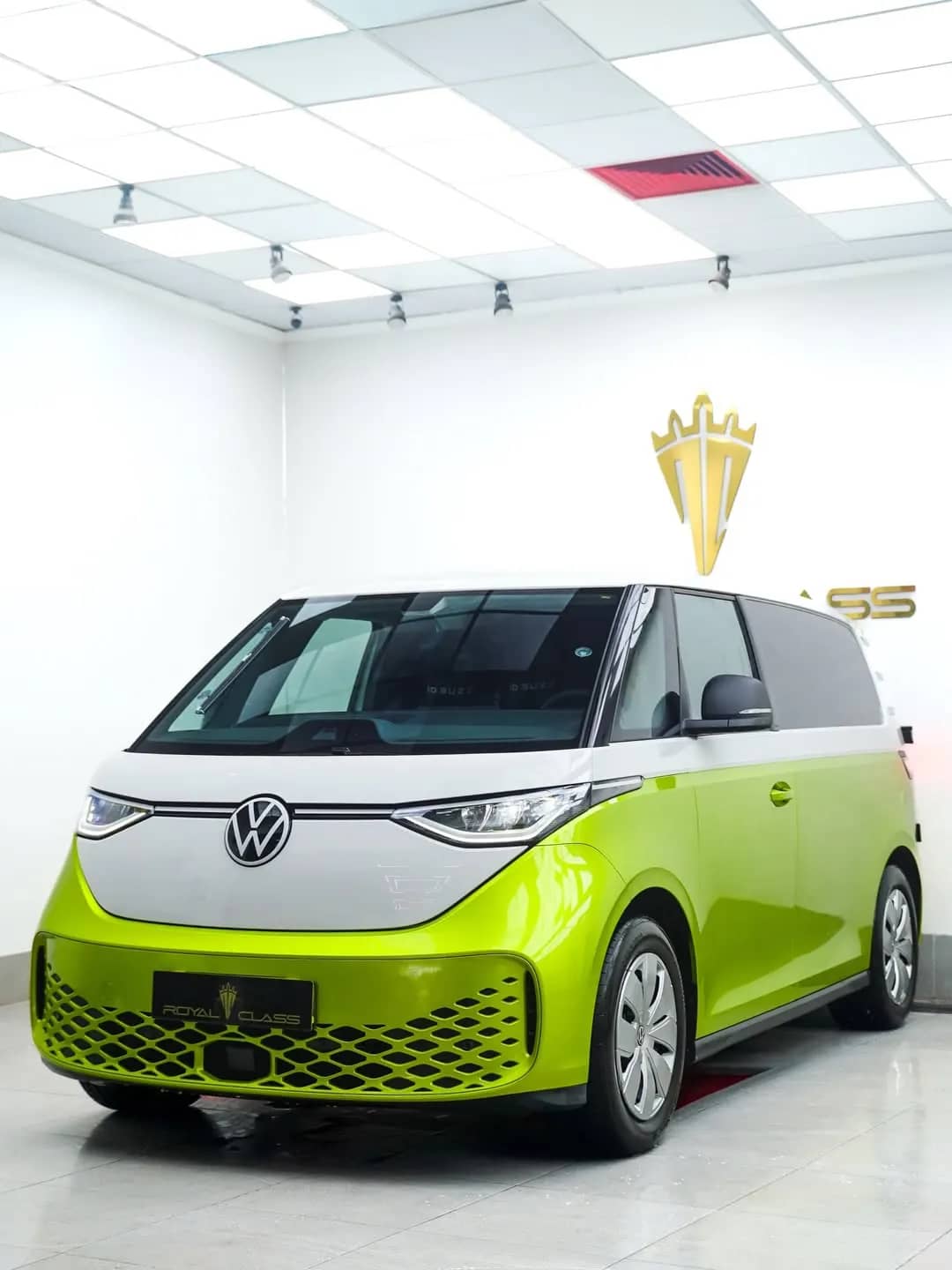
With a colour change wrap, film in the colour you choose is applied to the body surface, following the lines of the car. The car gets a new colour and surface texture, while the paint itself stays the same. The colour can be a single tone, and two-tone designs are possible too. On our Volkswagen ID. Buzz project the upper section was wrapped in white and the lower section in a vivid green, giving a two-tone finish.
There is another option that changes the colour: coloured PPF. It meets a different expectation; we explain the details in our guide to what paint protection film is.
Respray or wrap?
The classic way to change the colour is a respray. A respray covers the car’s original paint with a new coat, and it is hard to reverse. Film leaves the original paint in place, and that difference makes it possible to remove the film later, switch to another colour or return the car to how it was. On the other hand, the two are different materials; the look, texture and care of the surface are not exactly the same. Which is right depends on your expectations, the condition of the paint and your choice of colour. Here we focus on the wrapping side.
Who is a colour change wrap for?
A wrap may be worth considering if one or more of these situations sounds familiar:
- You no longer like your car’s current colour and want a new look.
- You want to keep the original paint in place and be able to change the colour when you wish.
- You want to try a texture more than a colour, such as a matte or satin surface.
- You want to personalise the car with details such as the roof, mirror caps or chrome parts.
It is fine if none of these describes you exactly; just tell us what you have in mind. We look at it together at the inspection.
How does a colour change wrap work?
- Colour and coverage. The colour, surface texture and coverage are chosen together. Whether the whole car or only certain parts will be wrapped is settled at this stage.
- Inspection. The car’s paint and parts are inspected. Blistering or peeling paint, previous repairs and damaged parts can make the installation harder.
- Surface preparation. The car is cleaned and the surfaces to be wrapped are prepared. Film sits better on a clean, smooth surface.
- Film installation. The film is fitted to follow the lines of the car.
- Final check and handover. The edges and details are checked over, then the car is handed back.
How long the installation takes depends on the coverage and the condition of the car; we discuss this during the inspection.
What is good to know before wrapping?
- If the paint is blistering or peeling, or has had a repair, mention it at the meeting; it affects the coverage plan.
- Damaged or loose parts can make the installation harder. We assess these together at the inspection.
- Think about whether you want only the body to change colour, or also the wheel surrounds, mirror caps and chrome parts.
- You do not have to settle on one colour. Bringing a few examples is enough.
What is the difference between gloss, satin and matte finishes?
The same colour takes on a different character on different finishes. The surface texture shapes the car’s look as much as the colour does, and there are three basic options.
Here is how the three finishes compare at a glance:
| Criterion | Gloss | Satin | Matte |
|---|---|---|---|
| Light and reflection | Reflections on the body are distinct. | Softens and spreads light rather than reflecting it fully. | Keeps reflections to a minimum. |
| Look | Gives a paint-like shine; it stands out even more when the colour is vivid. | Sits between gloss and matte; the colour looks deeper and calmer. | Brings out the body lines with a plainer surface. |
| Care | A soft cloth, a suitable shampoo and gentle washing are usually enough. | The same gentle washing applies; polish and gloss-enhancing products should be avoided. | The same gentle washing applies; polish and gloss-enhancing products can spoil the look, and dust and fingerprints can show more on dark matte surfaces. |
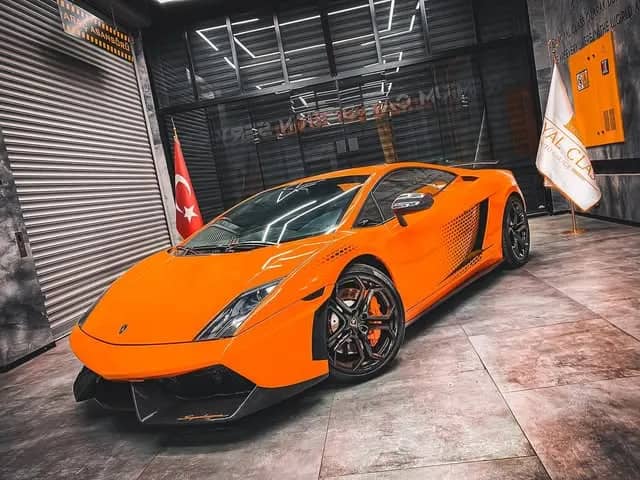
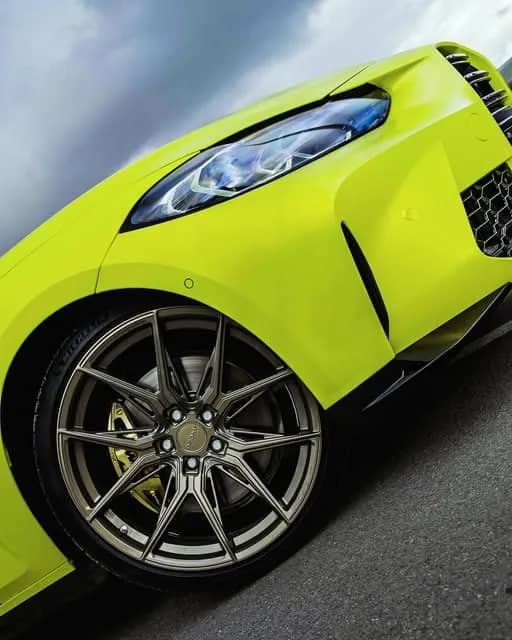
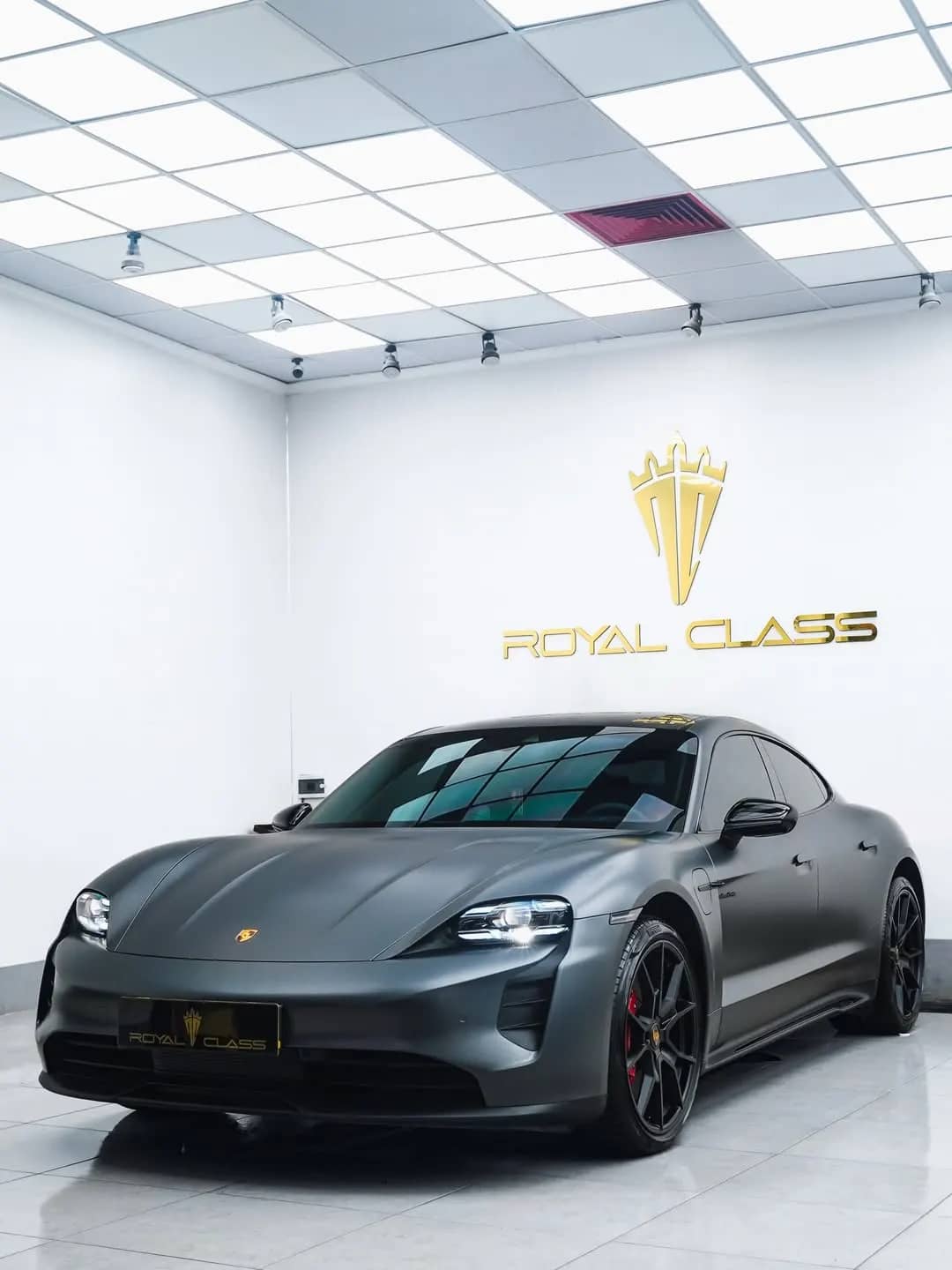
| Our example project | Lamborghini Gallardo, Citrus Orange | BMW 430 Cabrio, neon green | Porsche Taycan GTS, dark charcoal |
Gloss finish
Gloss film gives a paint-like shine, with distinct reflections on the body. When the colour is vivid, a gloss finish stands out even more. On our Lamborghini Gallardo project the white body was wrapped in a gloss film in Citrus Orange.
Satin finish
Satin sits between gloss and matte. It softens and spreads light rather than reflecting it fully, so the colour looks deeper and calmer. On the BMW 430 Cabrio project we used a neon green film with a satin texture; the close-up shows the surface’s soft reflection.
Matte finish
Matte film keeps reflections to a minimum and brings out the body lines with a plainer surface. Dust and fingerprints can show more on dark matte surfaces. Caring for a matte surface is a little different from the others; polish and gloss-enhancing products can spoil its look. We cover this in our guide to caring for a wrapped car. Our Porsche Taycan GTS project shows the dark charcoal look of a matte colour well.
There is no right or wrong among the three finishes; what matters is how well it suits the car’s character and your expectations. If you find it hard to decide, you can look at project examples to see the same colour on different finishes and narrow down your choice together during the inspection.
What to consider when choosing a colour
- Light changes colour. The same colour looks different in daylight, in shade and under workshop lighting. Screens can show colours differently too, so it is better not to base your decision on an on-screen sample alone.
- Think about the car’s lines. Dark and matte colours make lines look cleaner, while vivid colours draw attention. Seeing how a colour works with a car’s lines in project examples makes the decision easier.
- Remember the details. Details such as the wheel surrounds, mirror caps, chrome parts and headlight surrounds can be planned together with the main colour.
- Be careful with colour names. The same colour name has a different character on gloss, satin and matte finishes; seeing an applied example makes the decision easier than reading the name.
- Tell us what you expect. If you are undecided, browse our car wrapping projects and bring the examples you like to the inspection; we will settle on the look closest to what you want together.
What is useful to bring to the first meeting?
- Photos of cars or colours you like
- The surface texture you have in mind: gloss, satin or matte
- What you know about the car’s paint, such as whether it has had paintwork or repairs before
- Whether you want to wrap the whole car or only certain parts
The meeting can go ahead without these, but they help settle the plan faster.
Coverage: the whole car or selected areas?
You do not have to wrap the whole car. Selected areas such as the roof, mirror caps, wheel surrounds and chrome parts can be wrapped too. Whether door shuts and edge returns are included is settled at the inspection, depending on your car and what you want. If you are thinking of patterns, stripes or graphics rather than off-the-shelf colours, take a look at our custom wrap design page too.
Can the film be removed later?
The film is applied as a layer over the paint and can generally be removed. This means a colour change is, to a large extent, a reversible decision.
The result of removal depends on the condition of the paint underneath. Where the paint has been resprayed or repaired, or is blistering or peeling, there is a chance it may be affected during removal. That is why we look at the paint together before wrapping.
How long the film stays in good condition also depends on the product, use, care and weather. That is why we prefer to talk it through based on your car and how you use it rather than promise a specific period.
Care after wrapping
A soft cloth, a suitable shampoo and gentle washing are usually enough to keep the film looking good. On matte and satin finishes, polish and gloss-enhancing products should also be avoided. Care advice specific to the film on your car always takes priority over this general information.
How do we work at the workshop?
At Royal Class Garage, car wrapping is carried out at our workshop in Bornova. In the time set aside for your car, we first talk about the colour and coverage, then inspect the paint and settle the plan. You can also browse the options on our car wrapping page.
Let’s choose your car’s new colour together
Let’s go over the colour, surface texture and coverage together at our workshop and settle on a plan that matches what you expect during the inspection.